
 EN
EN ES
ES RU
RURELATED



MESSAGE
1. Classification by the control trajectory of machine tool motion
(1) Point-controlled CNC machine tools Point-controlled CNC machine tools only require the accurate positioning of the moving parts of the machine tool from one point to another. The requirements for the motion trajectory between points are not strict. No processing is performed during the movement, and the motion between the coordinate axes is unrelated. In order to achieve fast and accurate positioning, the displacement movement between two points generally moves quickly first and then approaches the positioning point slowly to ensure positioning accuracy. The following figure shows the motion trajectory of point-controlled CNC machines. Machine tools with point-controlled functions mainly include CNC drilling machines, CNC milling machines, CNC punching machines, etc. With the development of CNC technology and the reduction in the price of CNC systems, CNC systems used solely for point-controlled CNC systems are no longer common.
⑵ Linear control CNC machine tools
Linear control CNC machine tools are also called parallel control CNC machine tools. Their characteristics are that in addition to controlling the accurate positioning between points, they also control the moving speed and route (trajectory) between two related points. However, their movement route is only parallel to the machine tool coordinate axis, that is, there is only one coordinate axis controlled at the same time (that is, there is no need for interpolation calculation function in the CNC system). During the displacement process, the tool can cut at a specified feed speed, and generally can only process rectangular and step-shaped parts. The machine tools with linear control functions mainly include relatively simple CNC lathes, CNC milling machines, CNC grinders, etc. The CNC system of this machine tool is also called linear control CNC system. Similarly, CNC machine tools used solely for linear control are also rare.
⑶ Contour control CNC machine tools
Contour control CNC machine tools are also called continuous control CNC machine tools. Their control characteristics are that they can simultaneously control the displacement and speed of two or more motion coordinates. In order to meet the requirements that the relative motion trajectory of the tool along the workpiece contour meets the workpiece processing contour, the displacement control and speed control of each coordinate motion must be accurately coordinated according to the prescribed proportional relationship. Therefore, in this type of control, the CNC device is required to have an interpolation function. The so-called interpolation is to describe the shape of a straight line or arc through the mathematical processing of the interpolation operator in the CNC system according to the basic data input by the program (such as the end point coordinates of a straight line, the end point coordinates of an arc and the center coordinates or radius). That is, while calculating, pulses are distributed to each coordinate axis controller according to the calculation results, so as to control the linkage displacement of each coordinate axis to be consistent with the required contour. During the movement, the tool continuously cuts the surface of the workpiece, and various straight lines, arcs, and curves can be processed. Contour control machining trajectory. This type of machine tool mainly includes CNC lathes, CNC milling machines, CNC wire cutting machines, machining centers, etc., and its corresponding CNC device is called contour control. According to the different number of linkage coordinate axes it controls, the CNC system can be divided into the following forms: ① Two-axis linkage: mainly used for CNC lathes to process rotating surfaces or CNC milling machines to process curved cylinders. ② Two-axis semi-linkage: mainly used for the control of machine tools with more than three axes, in which two axes can be linked and the other axis can be fed periodically. ③ Three-axis linkage: Generally divided into two categories, one is the linkage of three linear coordinate axes X/Y/Z, which is more commonly used in CNC milling machines, machining centers, etc. The other is that in addition to simultaneously controlling two linear coordinates in X/Y/Z, it also simultaneously controls the rotating coordinate axis rotating around one of the linear coordinate axes. For example, in a turning machining center, in addition to the linkage of the longitudinal (Z axis) and transverse (X axis) linear coordinate axes, it also needs to simultaneously control the linkage of the spindle (C axis) rotating around the Z axis. ④ Four-axis linkage: Simultaneously control the linkage of three linear coordinate axes X/Y/Z and a rotating coordinate axis. ⑤ Five-axis linkage: In addition to simultaneously controlling the linkage of the three linear coordinate axes X/Y/Z. It also simultaneously controls two of the coordinate axes A, B, and C that rotate around these linear coordinate axes, forming a simultaneous control of five axis linkage. At this time, the tool can be set in any direction in space. For example, the tool is controlled to swing around the x-axis and the y-axis at the same time, so that the tool always maintains the normal direction with the contour surface being processed at its cutting point, so as to ensure the smoothness of the processed surface, improve its processing accuracy and processing efficiency, and reduce the roughness of the processed surface.
2. Classification by servo control method
⑴ The feed servo drive of open-loop control CNC machine tools is open-loop, that is, there is no detection feedback device. Generally, its driving motor is a stepper motor. The main feature of the stepper motor is that the motor rotates a step angle every time the control circuit changes the command pulse signal, and the motor itself has self-locking ability. The feed command signal output by the CNC system controls the drive circuit through the pulse distributor. It controls the coordinate displacement by changing the number of pulses, controls the displacement speed by changing the frequency of the pulses, and controls the direction of the displacement by changing the distribution order of the pulses. Therefore, the biggest feature of this control method is convenient control, simple structure and low price. The command signal flow issued by the CNC system is unidirectional, so there is no stability problem of the control system, but because the error of the mechanical transmission is not corrected by feedback, the displacement accuracy is not high. Early CNC machine tools all adopted this control method, but the failure rate was relatively high. At present, due to the improvement of the drive circuit, it is still widely used. Especially in my country, general economical CNC systems and CNC transformation of old equipment mostly adopt this control method. In addition, this control method can be configured with a single-chip microcomputer or a single-board computer as a CNC device, which reduces the price of the entire system.
⑵ Closed-loop control machine tools The feed servo drive of this type of CNC machine tool works in a closed-loop feedback control mode. Its drive motor can use DC or AC servo motors, and needs to be configured with position feedback and speed feedback. The actual displacement of the moving parts is detected at any time during processing, and it is fed back to the comparator in the CNC system in time. It is compared with the command signal obtained by the interpolation operation, and the difference is used as the control signal of the servo drive, which drives the displacement component to eliminate the displacement error. According to the installation location of the position feedback detection element and the feedback device used, it is divided into two control modes: full closed loop and semi-closed loop.
① Full closed-loop control As shown in the figure, its position feedback device uses a linear displacement detection element (currently generally a grating ruler) installed on the saddle of the machine tool, that is, directly detecting the linear displacement of the machine tool coordinates. The transmission error in the entire mechanical transmission chain from the motor to the machine tool saddle can be eliminated through feedback, thereby obtaining a high static positioning accuracy of the machine tool. However, since the friction characteristics, rigidity and clearance of many mechanical transmission links in the entire control loop are nonlinear, and the dynamic response time of the entire mechanical transmission chain is very large compared with the electrical response time. This brings great difficulties to the stability correction of the entire closed-loop system, and the design and adjustment of the system are also quite complicated. Therefore, this full closed-loop control method is mainly used for CNC coordinate machines and CNC precision grinders with high precision requirements.
② Semi-closed-loop control As shown in the figure, its position feedback uses an angle detection element (currently mainly encoders, etc.), which is directly installed on the servo motor or the end of the lead screw. Since most of the mechanical transmission links are not included in the closed-loop loop of the system, it is called to obtain a more stable control characteristic. Mechanical transmission errors such as lead screws cannot be corrected at any time through feedback, but software constant compensation methods can be used to appropriately improve their accuracy. At present, most CNC machine tools use semi-closed loop control methods. ⑶ Hybrid control CNC machine tools selectively concentrate the characteristics of the above control methods to form a hybrid control scheme. As mentioned above, since the open-loop control method has good stability, low cost, poor accuracy, and the full closed-loop stability is poor, in order to compensate for each other and meet the control requirements of certain machine tools, a hybrid control method should be adopted. The two most commonly used methods are open-loop compensation type and semi-closed-loop compensation type.
3. Classification by the functional level of the CNC system
According to the functional level of the CNC system, the CNC system is usually divided into three categories: low, medium, and high. This classification method is more commonly used in my country. The boundaries of the three levels of low, medium, and high are relative, and the classification standards will be different in different periods. Judging from the current level of development, various types of CNC systems can be divided into three categories: low, medium, and high according to some functions and indicators. Among them, medium and high-end are generally called full-function CNC or standard CNC.
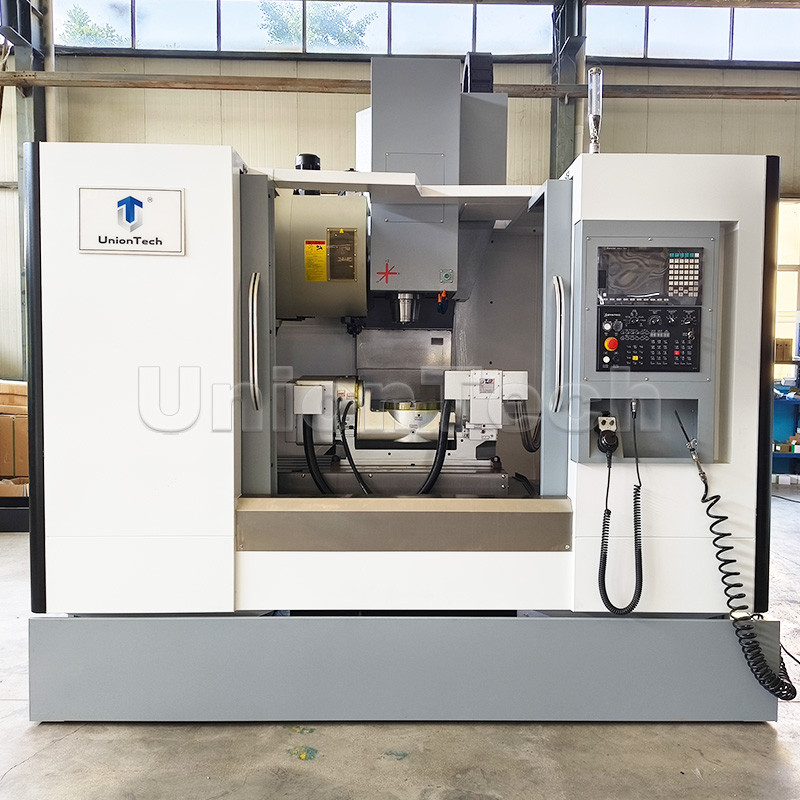
⑴ Metal cutting refers to CNC machine tools that use various cutting processes such as turning, milling, impact, reaming, drilling, grinding, and planing. It can be divided into the following two categories. ① Ordinary CNC machine tools, such as CNC lathes, CNC milling machines, CNC grinders, etc. ② Machining center, its main feature is the tool library with automatic tool change mechanism, the workpiece is clamped once. After clamping, by automatically changing various tools, the workpiece processing surfaces are continuously milled (turned), reamed, drilled, tapped, and other processes on the same machine tool, such as (building/milling) machining centers, turning centers, drilling centers, etc.
⑵ Metal forming refers to CNC machine tools that use extrusion, punching, pressing, drawing and other forming processes. Commonly used ones are CNC presses, CNC bending machines, CNC pipe bending machines, CNC spinning machines, etc.
⑶ Special processing mainly includes CNC EDM wire cutting machines, CNC EDM forming machines, CNC flame cutting machines, CNC laser processing machines, etc.
⑷ Measurement and drawing
Mainly includes three-coordinate measuring machine, CNC tool setting machine, CNC plotter, etc.
CONTACT US
Please use the form below to get in touch.
If you need a reply we will get in touch as soon as possible.
ENESRU